How Small Businesses Can Compete with Big Brands Using AI Ads
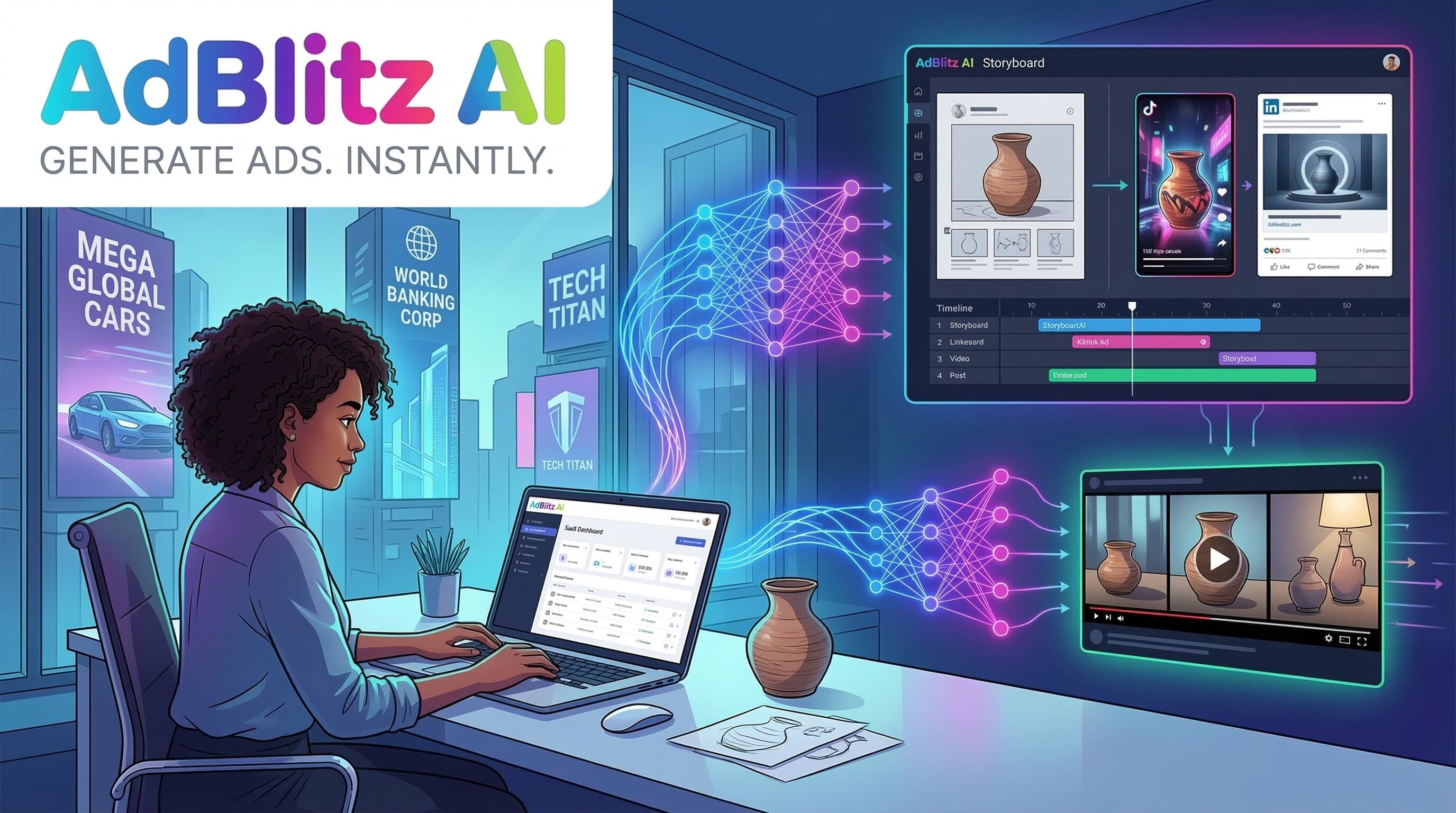
The Advertising Gap Between Small and Large Businesses
For decades, a significant gap has existed between the advertising capabilities of large corporations and small businesses. Big brands employ creative agencies, production houses, and dedicated marketing teams that produce high-quality video content consistently. Small businesses, operating with limited budgets and small teams, have been unable to match this production quality and volume.
This gap has real consequences. On advertising platforms like Google, Meta, and TikTok, ad quality directly influences cost and delivery. Higher-quality, more engaging ads receive lower cost-per-click, more impressions, and better placement. Businesses running lower-quality ads — often static images or poorly produced videos — pay more for less results.
AI ad generators are closing this gap by giving small businesses access to professional-quality video ad production at a fraction of the traditional cost.
How AI Levels the Playing Field
Professional quality without professional costs. A small business owner can now produce video ads that are visually comparable to what a major brand creates with a production agency. AI ad generators use the same types of visual effects, professional voiceover, and cinematic composition that characterize big-budget advertising.
Speed that matches opportunity. Large brands can mobilize production teams for seasonal campaigns, product launches, and trending moments. Small businesses often miss these windows because traditional production takes too long. With AI, a small business can create a themed ad campaign in minutes — launching Black Friday ads, seasonal promotions, or trend-responsive content in real time.
Volume that enables testing. Big brands succeed partly because they test extensively. They might produce 50 ad variations and let data identify the top performers. Small businesses traditionally could afford only 1-2 versions, missing the optimization benefits of testing. AI generation makes high-volume testing affordable for any budget.
Practical Strategy for Small Business AI Advertising
Here is a step-by-step strategy for small businesses to compete effectively using AI-generated ads:
Step 1: Start with your best-selling product
Do not try to advertise everything at once. Choose your top-selling or highest-margin product and focus your initial AI ad efforts there.
Step 2: Create 10 ad variations
Generate 10 different video ads for the same product. Vary the product description (emphasize different benefits), try different ad categories (General, UGC, your specific industry), and test both 2-scene and 3-scene versions.
Step 3: Launch a testing campaign with a small budget
Allocate $10-20 per day across your 10 variations on one platform (start with Meta or TikTok). Let each variation run for 3-5 days to gather enough data.
Step 4: Identify winners and scale
After the testing period, analyze which 2-3 ads performed best (lowest cost-per-click, highest engagement, most conversions). Pause the underperformers and increase budget on the winners.
Step 5: Refresh and repeat
Every 2-3 weeks, generate new variations to prevent ad fatigue. Use insights from your winners to guide the next round — if UGC-style ads outperformed product showcase ads, lean into that format.
Cost Comparison: Small Business Advertising
Here is what a typical small business advertising program costs with traditional versus AI production:
Traditional approach (monthly):
- 2 video ads from freelance videographer: $1,000 - $3,000
- Stock footage and music licensing: $100 - $300
- Ad spend: $500 - $2,000
- Total: $1,600 - $5,300 per month
AI approach (monthly):
- AI ad generator subscription (Starter plan): $39
- Ad spend: $500 - $2,000
- Total: $539 - $2,039 per month
The AI approach costs 50-70% less while producing 10x more ad variations. This means more of the budget goes toward actual ad distribution rather than production — which is where the ROI actually comes from.
Common Objections and Realities
"AI ads won't look as good as professionally produced ones." For social media advertising — where most small business ad spend goes — the difference in quality is negligible. In fact, overly polished content often performs worse on platforms like TikTok and Instagram because it feels inauthentic.
"My product is too unique/complex for AI." AI ad generators work with any physical product that can be photographed. The AI does not need to understand your product's technical specifications — it generates visual content based on the image and creates narrative based on your description.
"I don't know anything about advertising." This is actually an advantage of AI ad generators. You do not need to know about video editing, color grading, voiceover production, or music licensing. You need to know your product and your customer — the AI handles everything else.
"Big brands have more data and better targeting." True, but AI-generated ads help small businesses close this gap. By creating more variations and testing more aggressively, small businesses can discover their own high-performing creative and audience combinations.
Industries Where Small Business AI Ads Have the Biggest Impact
- E-commerce and direct-to-consumer brands. Online stores depend on product video ads for sales. AI generation enables even solo-operated stores to produce professional product videos.
- Local service businesses. Restaurants, salons, fitness studios, and professional services can create promotional videos showcasing their offerings without hiring a production crew.
- Handmade and artisan products. Creators selling on Etsy, Amazon Handmade, or their own websites can produce commercial-quality ads that previously required production budgets they could not justify.
- Dropshipping and print-on-demand. These businesses often lack physical product samples for traditional photography. AI ad generators can create compelling product videos from supplier images.
- New product launches. Startups and small brands launching new products can create launch campaigns with the same visual quality as established competitors, building credibility from day one.
The Bottom Line
The advertising gap between small and large businesses is narrowing rapidly. AI ad generators give small businesses the tools to produce professional video advertising at a cost and speed that was impossible just two years ago.
The businesses that adopt AI advertising tools now will build a significant competitive advantage — not just in production efficiency, but in the optimization data they accumulate from testing more creative variations across more audience segments.
The question is no longer whether small businesses can afford professional video advertising. With AI, the question is whether they can afford not to.
Ready to create AI-powered commercial ads?
Try AdBlitz AI Free